
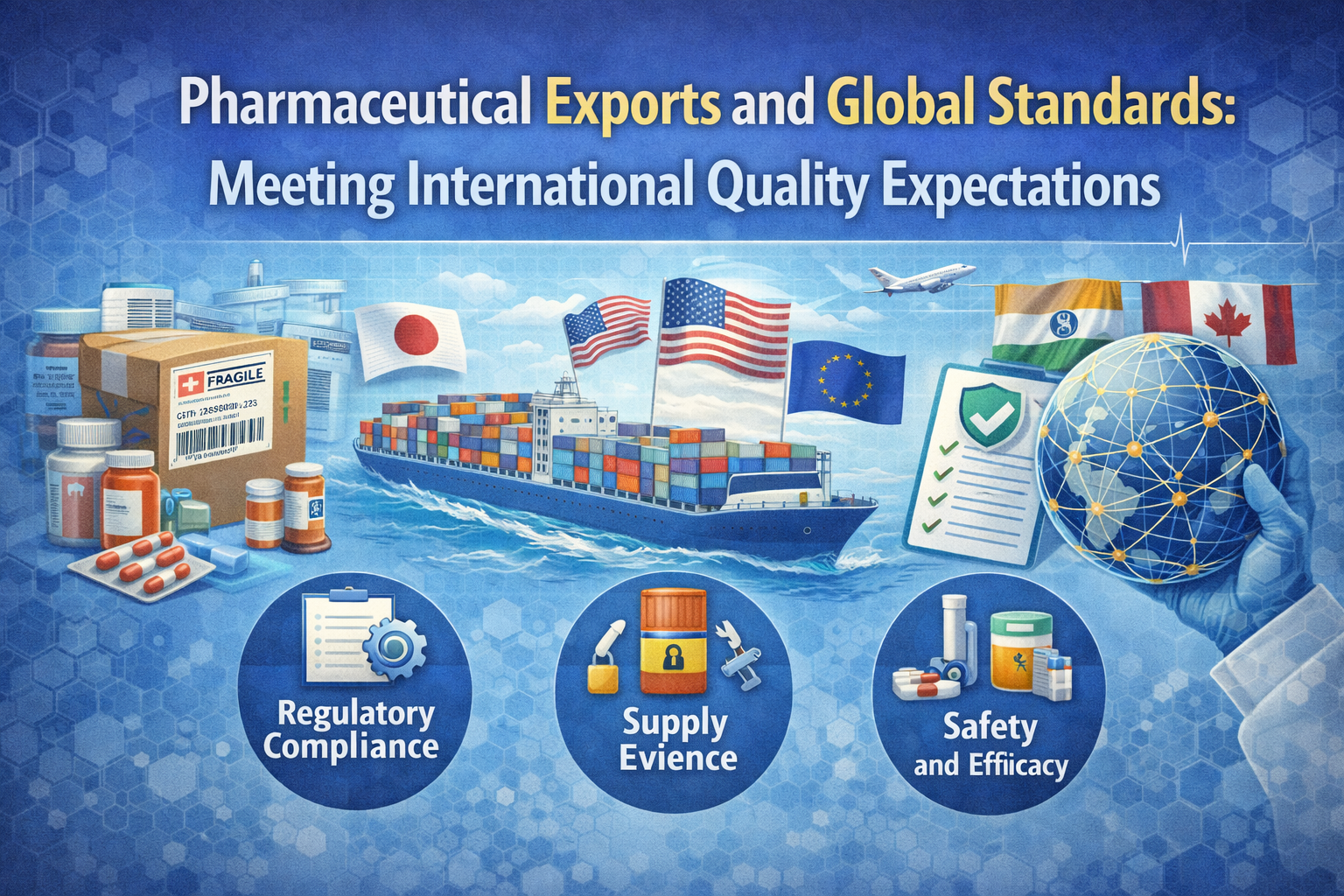
As healthcare becomes increasingly global, pharmaceutical exports play a crucial role in delivering safe and effective medicines across borders. Exporting pharmaceutical products requires more than strong demand—it demands strict compliance with international quality, safety, and regulatory standards.
The Growing Importance of Pharmaceutical Exports
Pharmaceutical exports enable manufacturers to expand their reach, serve international healthcare systems, and contribute to global patient well-being. However, different countries have varying regulatory requirements, making compliance a critical factor for successful market entry.
Export-ready pharmaceutical products must demonstrate:
Consistent quality and safety
Regulatory compliance across regions
Reliable supply chain management
Proper documentation and traceability
Adhering to International Quality Standards
To compete in global markets, pharmaceutical manufacturers must align their processes with internationally recognized quality standards. These standards ensure that products manufactured in one country are safe and effective for patients worldwide.
Key focus areas include:
GMP-aligned manufacturing systems
Standardized quality control testing
Validated production and packaging processes
Robust quality management systems
Consistency across batches is essential to meet global expectations.
Regulatory Documentation and Compliance
Regulatory documentation is the backbone of pharmaceutical exports. Authorities require detailed records to verify product quality, safety, and manufacturing integrity.
Essential export documentation includes:
Product dossiers and specifications
Certificates of analysis
Batch manufacturing records
Stability and shelf-life data
Accurate and transparent documentation builds trust with international regulators and partners.
Supply Chain and Logistics Considerations
Maintaining product quality during transportation is as important as manufacturing itself. Temperature control, secure packaging, and proper handling are critical to preserving product integrity during transit.
Effective export logistics focus on:
Secure and tamper-evident packaging
Temperature-controlled storage and transport
Clear labeling and shipment tracking
Risk management across the supply chain
Building Global Trust Through Compliance
Pharmaceutical companies that successfully export their products demonstrate a strong commitment to quality and responsibility. Compliance with global standards not only enables market access but also strengthens long-term partnerships with distributors, healthcare providers, and regulators.
Conclusion
Pharmaceutical exports are built on trust, quality, and regulatory excellence. By adhering to global standards and maintaining rigorous quality systems, manufacturers can confidently deliver healthcare solutions beyond borders and support healthier communities worldwide.