
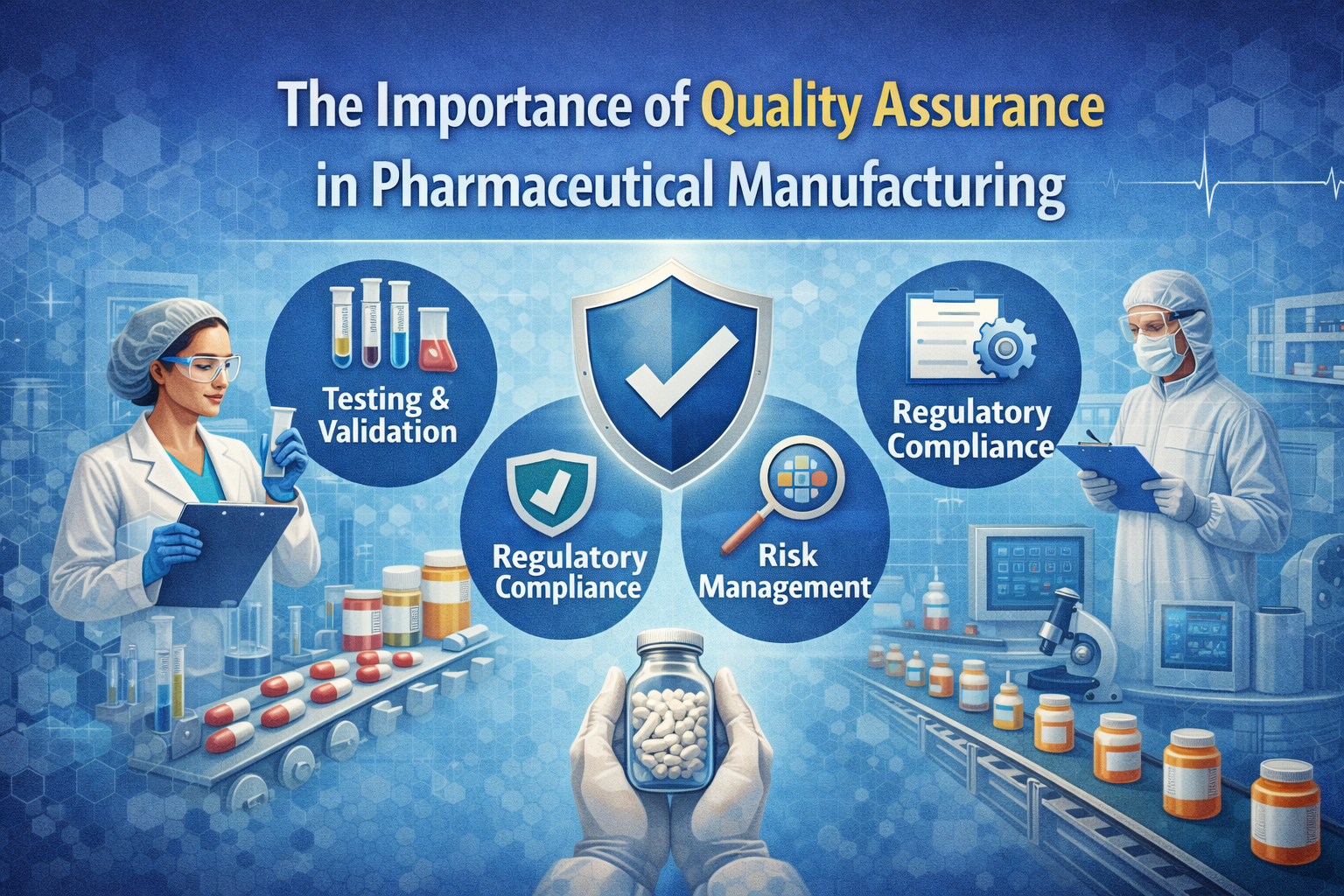
Quality assurance (QA) is a cornerstone of pharmaceutical manufacturing. It ensures that every product released to the market meets required safety, efficacy, and quality standards. In an industry where patient health is directly impacted, quality assurance is not optional—it is essential.
What Is Quality Assurance in Pharmaceuticals?
Quality assurance is a systematic approach that guarantees pharmaceutical products are consistently produced and controlled according to established quality standards. Unlike quality control, which focuses on testing finished products, QA covers the entire manufacturing process.
Quality assurance includes:
Process validation and control
Documentation and record management
Compliance with regulatory guidelines
Risk assessment and continuous improvement
Quality Assurance vs. Quality Control
While often mentioned together, quality assurance and quality control serve different purposes.
Quality Assurance focuses on preventing defects by improving processes
Quality Control focuses on detecting defects through testing and inspection
Together, they create a robust quality system that ensures product reliability and patient safety.
Key Components of an Effective QA System
A strong pharmaceutical QA system is built on several critical elements:
Standard Operating Procedures (SOPs)
Clear and well-documented SOPs ensure consistency in manufacturing, testing, and handling processes. They reduce human error and promote accountability across departments.
Documentation and Traceability
Accurate documentation allows complete traceability of raw materials, production batches, and finished products. This is essential for audits, recalls, and regulatory inspections.
Training and Personnel Competency
Well-trained staff are vital to maintaining quality standards. Regular training ensures employees understand GMP requirements and follow best practices.
Process Validation
Validation confirms that manufacturing processes consistently produce products meeting predefined quality criteria. It helps identify risks early and maintain process reliability.
Why Quality Assurance Matters for Patient Safety
Quality assurance minimizes the risk of contamination, incorrect dosage, and product variability. A strong QA system ensures that patients receive medicines that are safe, effective, and reliable.
Key benefits include:
Reduced product recalls
Improved regulatory compliance
Increased trust among healthcare providers
Enhanced brand reputation
Building Trust Through Quality Commitment
Pharmaceutical companies that prioritize quality assurance demonstrate their commitment to ethical manufacturing and patient care. Consistent quality not only meets regulatory requirements but also strengthens long-term relationships with partners and customers.
Conclusion
Quality assurance is the foundation of pharmaceutical excellence. By integrating comprehensive QA systems into every stage of manufacturing, pharmaceutical companies contribute to safer healthcare outcomes and uphold the highest standards of quality and trust.