
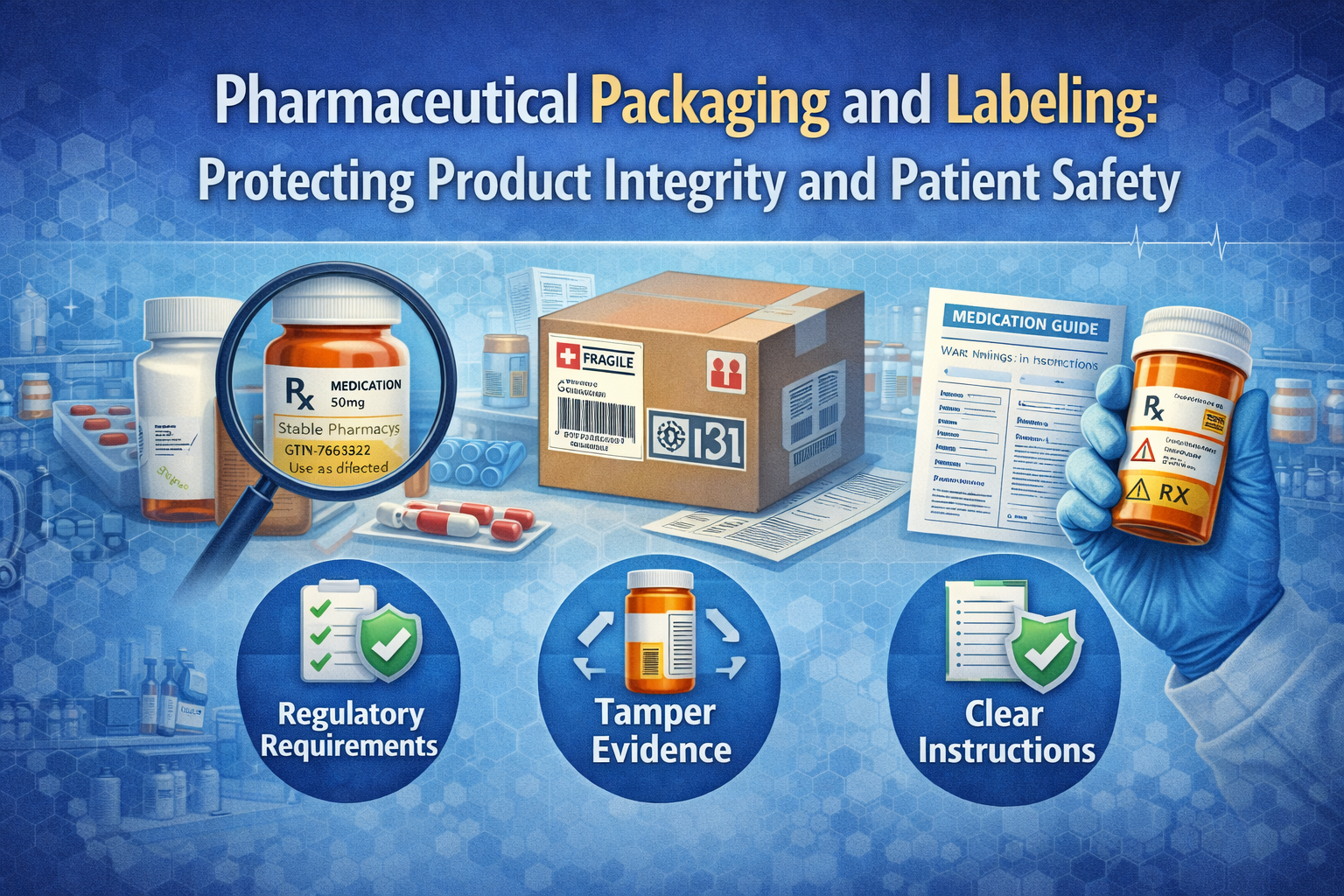
Pharmaceutical packaging and labeling play a critical role in safeguarding medicine quality, ensuring regulatory compliance, and protecting patient safety. Beyond aesthetics, effective packaging systems preserve product integrity throughout storage, transportation, and usage.
The Purpose of Pharmaceutical Packaging
Pharmaceutical packaging is designed to protect medicines from environmental factors such as moisture, light, oxygen, and contamination. Proper packaging ensures that products remain stable and effective until their expiration date.
Primary functions include:
Maintaining product stability
Preventing contamination and tampering
Enabling safe handling and transportation
Providing essential product information
Each packaging layer—from primary to secondary—serves a specific purpose within the supply chain.
Primary and Secondary Packaging Explained
Primary packaging comes into direct contact with the product. Examples include blister packs, bottles, vials, tubes, and sachets. Materials are carefully selected to ensure compatibility with the formulation.
Secondary packaging provides additional protection and includes cartons, boxes, and outer wraps. It also serves as a key surface for labeling and branding.
Both layers must comply with regulatory and quality standards to ensure product safety.
Importance of Accurate Pharmaceutical Labeling
Pharmaceutical labeling is a legal and ethical requirement. Clear, accurate, and compliant labels ensure that medicines are used correctly by healthcare professionals and patients.
Essential labeling elements include:
Product name and strength
Dosage instructions and route of administration
Batch number and expiry date
Storage conditions and warnings
Manufacturer details
Errors or omissions in labeling can lead to misuse, adverse effects, and regulatory action.
Regulatory Compliance in Packaging and Labeling
Pharmaceutical packaging and labeling are governed by strict regulatory guidelines to ensure consistency and traceability. Compliance helps prevent counterfeit products and supports efficient product recalls when necessary.
Manufacturers committed to compliance focus on:
Tamper-evident packaging solutions
Clear batch traceability
Regular quality inspections
Updated regulatory documentation
Enhancing Patient Confidence Through Packaging
Well-designed packaging improves patient confidence and compliance. Easy-to-read labels, secure closures, and user-friendly designs contribute to better treatment adherence and safer medicine use.
For pharmaceutical manufacturers, packaging is a direct extension of their quality promise.
Conclusion
Pharmaceutical packaging and labeling are vital components of the healthcare ecosystem. By investing in compliant, high-quality packaging solutions, manufacturers protect product integrity, meet regulatory expectations, and ultimately support better patient outcomes.