
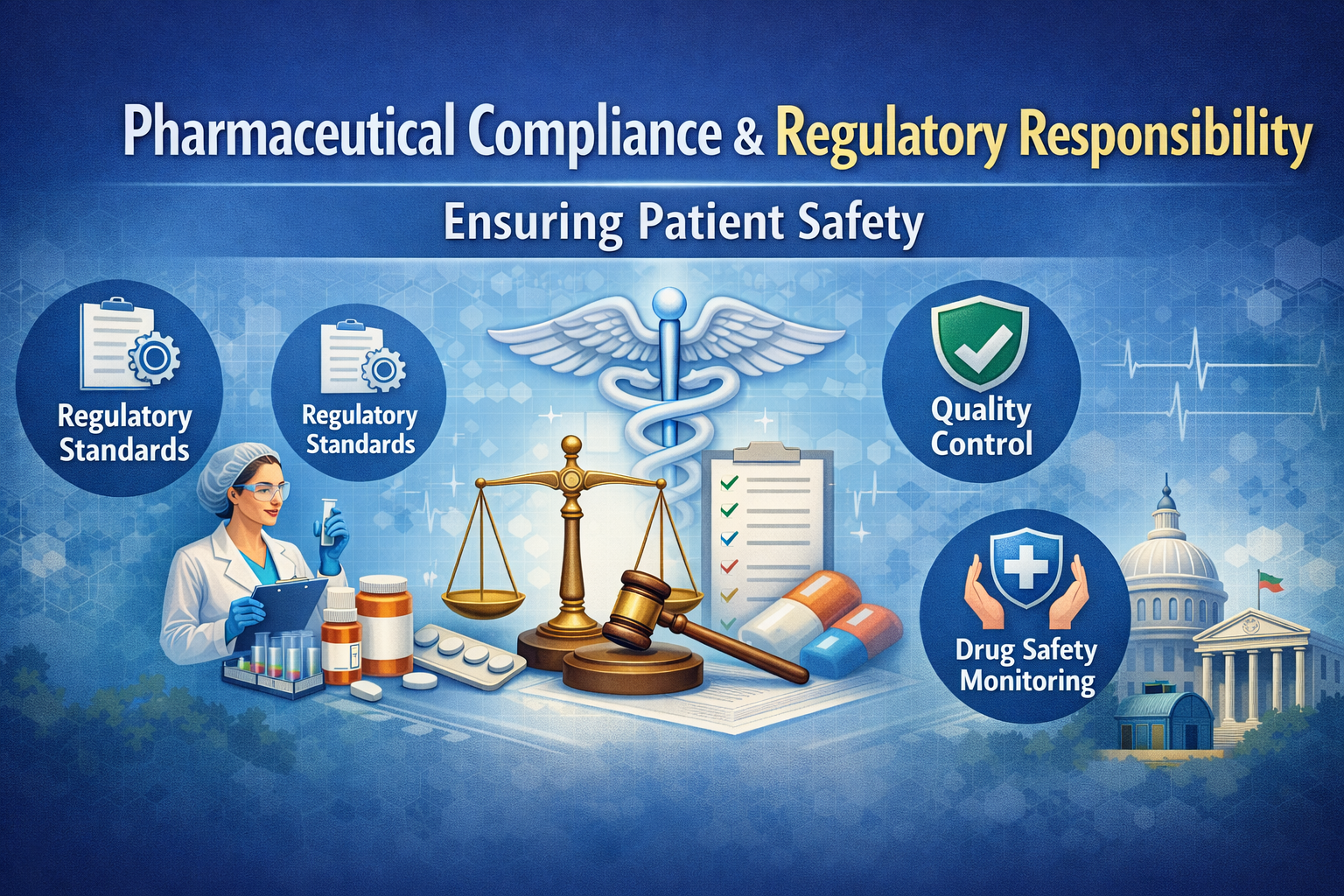
In the modern healthcare landscape, pharmaceutical compliance and regulatory responsibility are not just legal requirements—they are essential commitments to patient safety, product quality, and public trust. Every tablet, capsule, or syrup that reaches a patient carries the responsibility of strict adherence to globally recognized standards.
Understanding Pharmaceutical Compliance
Pharmaceutical compliance refers to following established laws, guidelines, and standards set by regulatory authorities to ensure medicines are safe, effective, and of consistent quality. These regulations govern every stage of the product lifecycle—from raw material sourcing to manufacturing, packaging, storage, and distribution.
Compliance ensures that:
-
Medicines are manufactured under controlled and hygienic conditions
-
Active ingredients meet required purity and potency standards
-
Products are consistently safe for patient use
The Role of Good Manufacturing Practices (GMP)
Good Manufacturing Practices (GMP) form the backbone of pharmaceutical compliance. GMP guidelines focus on minimizing risks involved in pharmaceutical production that cannot be eliminated through testing the final product alone.
Key GMP principles include:
-
Strict quality control systems
-
Proper documentation and traceability
-
Trained personnel and validated processes
-
Clean, controlled manufacturing environments
By following GMP-aligned procedures, pharmaceutical manufacturers ensure product reliability and regulatory acceptance across global markets.
Regulatory Responsibility in the Pharmaceutical Industry
Regulatory responsibility goes beyond meeting minimum requirements. It reflects a company’s ethical obligation to protect patients, healthcare professionals, and end users. This includes transparent reporting, product traceability, and proactive risk management.
Responsible pharmaceutical companies:
-
Regularly audit manufacturing processes
-
Ensure accurate labeling and packaging
-
Monitor product safety even after market release
-
Stay updated with evolving regulatory guidelines
Why Compliance Matters for Patient Safety
Non-compliance can lead to serious consequences such as product recalls, legal penalties, and most importantly, risks to patient health. Compliance-driven manufacturing significantly reduces the chances of contamination, dosage inconsistency, and product failure.
For patients, this means:
-
Reliable treatment outcomes
-
Reduced risk of side effects
-
Confidence in prescribed medications
Commitment to Quality and Trust
Pharmaceutical compliance is not a one-time effort—it is an ongoing commitment to excellence. Companies that prioritize regulatory responsibility build long-term trust with healthcare providers, partners, and patients alike.
By maintaining stringent quality standards and embracing regulatory best practices, pharmaceutical manufacturers play a vital role in supporting safer healthcare systems and improving lives worldwide.